
Negotiating Regulatory Constraints in a Digital Patient Support Platform
Executive Summary
BrightPath Patient Care was preparing for the US launch of Zepraxa & Me, a digital patient support platform for patients with chronic migraine. The platform failed to receive regulatory approval from the pharmaceutical sponsor. As the Customer Success Manager and client lead, I identified the root causes of the rejection and led the redesign of the platform to meet regulatory requirements.
| Insights from Research | Solutions |
|---|---|
| Community Manager and AI assistant features interact with patients in real-time, creating concerns of misinformation/ message control |
Redesign the content governance model to include content pre-approvals by client, standardized communications, and guardrails for the AI assistant |
| The “chat-with-community manager” feature created compliance risks due to reliance on manual adverse event and prohibited content management. (AI-assisted monitoring is prohibited by privacy regulations in 1-2-1 chats). |
Introduced a Risk Management approach:
|
| Errors in client deliverables reduced confidence in overall governance | Established an internal QA process with clear ownership, review standards, and quality checkpoints. |
Results: Secured approval for a $400K patient support program, reduced wireframe errors by 70%, and established a scalable governance model that preserved key patient engagement features.
overview
Background: BrightPath Patient Care is a health tech SaaS company that designs digital adherence and support platforms for pharmaceutical companies.
Client: Athelegard Neuroscience
My Role: Customer Success Manager
Product/Application: Zepraxa & Me
Purpose: An app to improve long-term medication adherence and safety for patients on Zepraxa, an infusion treatment for the prevention of chronic migraines.
Key Features:
-
![]()
1. AI Assistant
Guides users through onboarding
Answers general questions
-
![]()
2. Disease Education
-
![]()
3. Health Tools
Medication and symptom trackers
exportable health reports to share with physicians
-
![]()
4. Dedicated Community Manager
creates engagement with posts and 1-2-1 chats
Dedicated resource for users
-
![]()
5. Social Feed
Community Manager interaction with community
patient-to-patient interaction
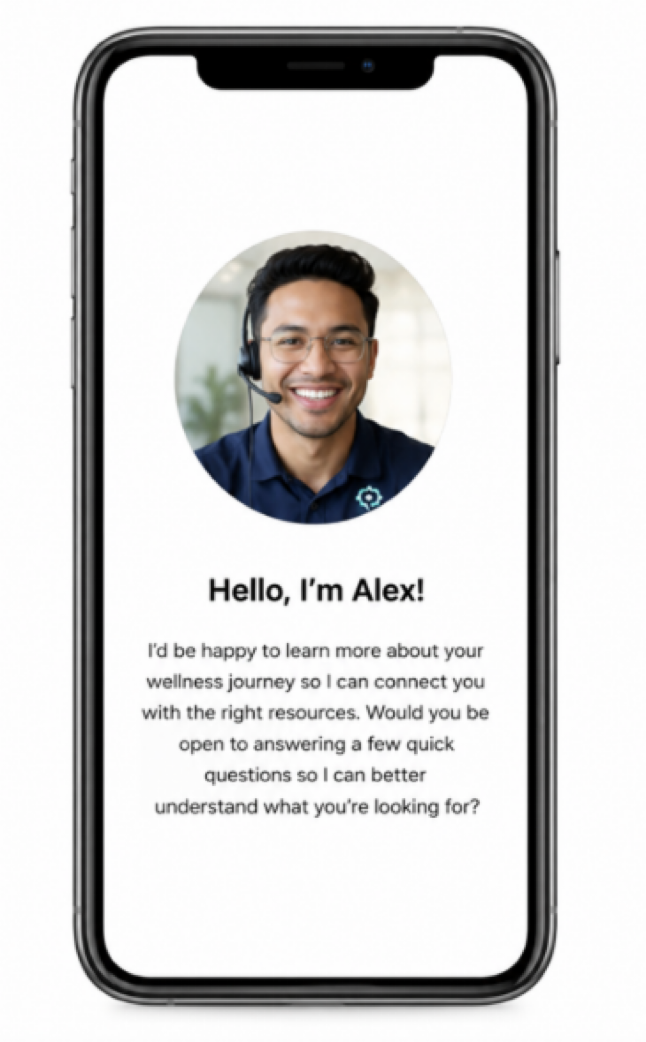

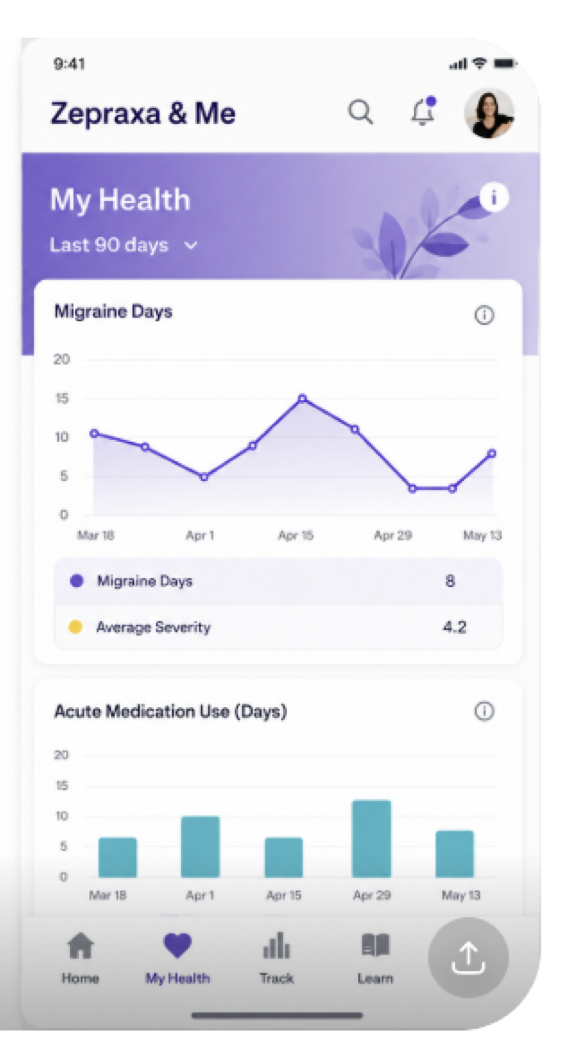

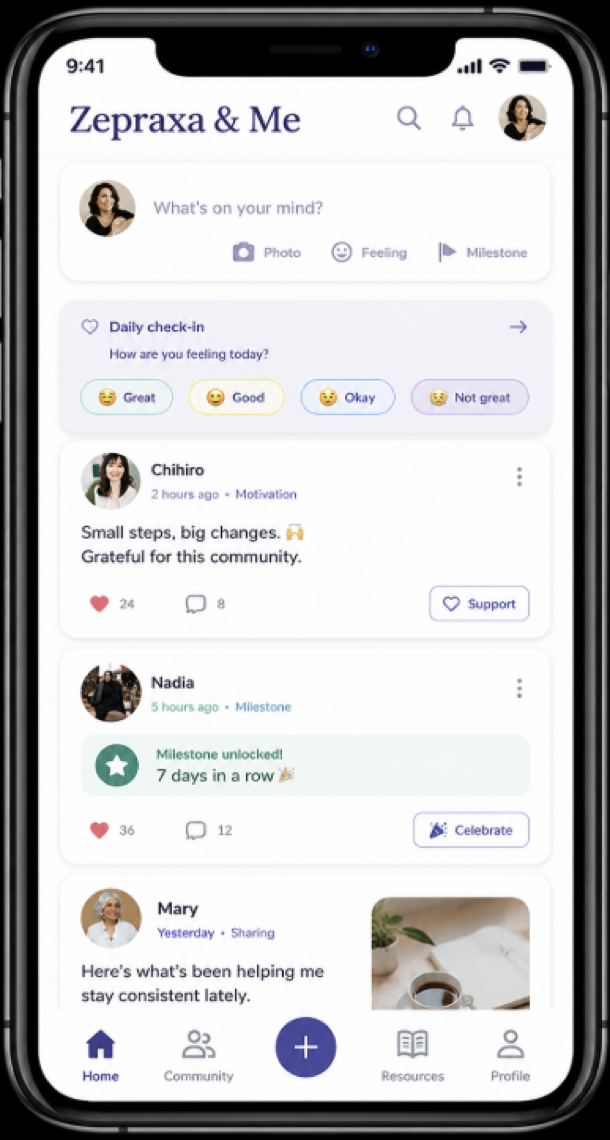
Context: To meet regulatory requirements, the platform included AI-assisted monitoring of the public feed to identify potential adverse events (patient-reported side effects experienced after medication) and prohibited content, such as profanity or harassment. Flagged content was managed by established governance processes, which included reporting adverse events, removing non-compliant content, or restricting user access when necessary.
the challenge
Zepraxa & Me failed to get launch approval from Athelegard’s regulatory teams during implementation. As the client relationship manager, I was tasked with understanding the regulatory concerns and redesigning the patient engagement model to balance compliance with program effectiveness.
research
Step 1
Debrief with key stakeholders from both Athelegard and BrightPath to uncover the underlying risk perceptions driving the rejection.

Key Learnings:
Concern 1: Real-time interaction with patients could result in loss of message control (misinformation)
Concern 2: 1-to-1 chat feature between patient and community manager introduces compliance risks
Concern 3: Frequent errors occur in app wireframes (mistakes in copy, functionality, visual design)
Supporting Quotes:
“Community Manager (CM) posts could unintentionally provide medical advice. Only HCPs should be giving patients medical advice.”
“ CM posts could link to unaccredited sources, spreading misinformation on the disease and treatment”
“ The AI assistant could use unapproved sources to answer questions”
“Privacy regulations prevent automatic moderation systems in direct messages. This creates a risk of AEs and prohibited content being unreported or mismanaged in the 1-to-1 chat feature between the CM and patients.”
“There are many errors and inconsistencies in the app wireframes. Spelling mistakes in proprietary names and contact information, inconsistent colour schemes and formats, etc.”
Step 2
Debrief with BrightPath’s internal team of product managers, UX designers, and content managers to understand the causes of errors in the wireframes.

Key Learnings:
No structured proofreading process and unclear accountabilities causes quality errors
Supporting Quotes:
“ No, we don’t have a list of best practices to follow when finalizing wireframes. We fix errors that the client points out on an ad hoc basis.”
“ Product Manager: Fixing this onboarding workflow is a UX designer's responsibility.”
“UX designer: The onboarding workflow affects functionality, so I thought the Product Manager would do this”
Key Insights
After synthesizing data from both meetings, 3 key insights emerged:
The potential for uncontrolled communications with patients from the Community Manager and AI assistant features caused fears of misinformation.
Privacy regulations required manual moderation of patient–community manager chats. This “error-prone” workflow introduced compliance risks for adverse event and prohibited content management.
High error rates in client deliverables not only delayed approval of app wireframes, but also weakened stakeholder confidence in the platform’s broader governance model in a highly regulated industry.
Problem Reframe
“How might we design governance systems that enable safe patient engagement — without sacrificing the adherence outcomes the platform was built to achieve?”
Ideation
Following cross-functional collaboration with the sales, marketing, CX, product, and analytics teams, we developed a range of potential solutions. I facilitated alignment across stakeholders to refine, iterate on, and finalize the recommended approach.
Solutions
Insight: Compliance risk associated with 1-to-1 chat feature
Solution: Optimize the risk-reward tradeoff
Example Executions:
Expand (the legally binding) Community Manager SOP to define clear, manual workflows and standards for adverse event & prohibited content management to create trust with client
Enable client review of community manager training materials to increase confidence in execution
Present impact data from comparable programs to demonstrate adherence benefits, shifting client mindset from risk-elimination to risk-management
Priority 1 (High risk): Adverse event and prohibited content management are strict regulatory requirements for pharma companies. Non-compliance can result in program cancellation.
Insight: Uncontrolled patient communications could cause misinformation
Solution: Increase client visibility and governance over patient-facing communications
Example Executions:
3-month content calendars for client pre-approval of community manager posts
Repository of accredited healthcare resources for pre-approval of linked content
Standardized patient communication scripts (ie. Patient welcome message)
Defined AI governance: responses generated only from pre-approved educational content, not the internet
Priority 2 (Medium risk): Preventing misinformation is important for patient safety but the client is confident that this can be done easily with increased governance
Insight: Errors in client deliverables causing delays and mistrust in broader governance mode
Solution: Established an internal QA process with key BrightPath team members
Reviewed three months of wireframe errors and conducted root-cause interviews with cross-functional teams
Synthesized best practices from successful deployments and co-created a standardized review process that improved quality, clarified accountabilities, and reduced errors.
Example Executions:
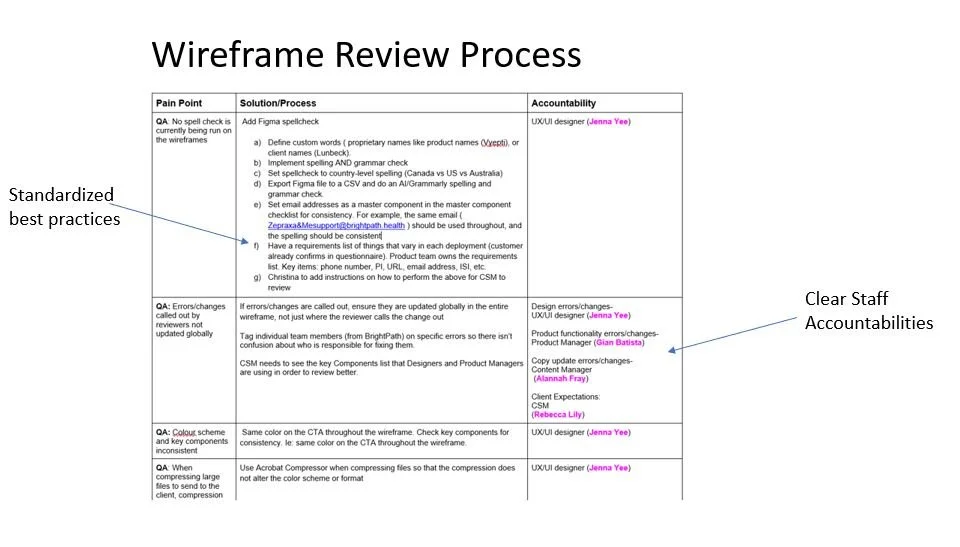
Priority 3 (Low-Medium risk): Not an immediate patient safety or compliance concern, but still important to reduce costs and strengthen trust in BrightPath’s broader governance model.
Results
App approved for launch, saving a $400k program
Over 10 hours saved per wireframe review round by using the structured process
Number of errors per round of wireframe review reduced by 70% with the structured process
Key Takeaways
In highly regulated healthcare environments, operational maturity and QA rigor directly influence stakeholder confidence in broader product governance.
2. Patient engagement features should not be evaluated solely through a compliance lens; they must also be assessed against their measurable impact on adherence and patient outcomes.
3. Many regulatory concerns stemmed from misunderstandings of how the technology functioned, demonstrating the importance of cross-functional education and transparency during implementation.